
When you’re ready to create a travel agent website, it’s easy to start a list of every page you might someday want. Destination pages, a blog, a group travel page, a page for each niche you’re excited about. That list grows fast, and a long list is usually what keeps a new travel advisor from launching at all.
You need fewer pages than you think. A new website has one main job: help someone who is curious about working with you trust you enough to reach out. Everything else can come later, as your business grows into it.
I’ve built more versions of my own website than I’d like to admit, so I know how hard it is to decide what belongs and what doesn’t. Here’s how to sort it out.
What a new travel advisor website needs to do
Before you think about pages, think about what a potential client wants to know when they land on your site. Mostly, they want to know whether you plan the kind of trip they have in mind and how to get in touch with you.
Your website answers those questions. If a page doesn’t help answer one of them, it can wait.
The core pages you need to create a travel agent website
Most new travel advisor websites are built on five core pages.
Home
Your home page is a quick introduction. Within a few seconds, a visitor should understand who you help and what kind of travel you plan, with an easy next step right in front of them. You don’t need to tell your whole story here. Give people enough to keep going.
About
People book travel advisors they trust, and trust starts with knowing who you are. Share why you do this work and the kind of travel you know best, and include a real photo of yourself. If your agency has a brand name, make it clear that you’re the advisor behind it.
Services
This is where you explain what you plan and what working with you looks like. A simple overview of your planning process goes a long way, especially for clients who have never worked with a travel advisor before.
Contact
Keep it easy. A short inquiry form or a link to book a call is enough. Ask only for what you need to start the conversation.
FAQ
An FAQ page answers the questions you find yourself repeating, like how far ahead to book or what happens after someone fills out your form. It saves you time and helps the right clients feel confident getting in touch.
What to put on your travel agent website beyond the core pages
A few supporting pages are worth setting up early because they do quiet, practical work in the background.
- Legal pages. A privacy policy and terms page are a standard part of any business website. Get the content from a legal source you trust rather than copying another site’s.
- Link in Bio page. If people find you on Instagram, a Link in Bio page on your own website keeps them on your site instead of sending them to a third-party link tool.
- Coming Soon page. If your full site isn’t ready yet, a Coming Soon page gives people something to land on while you finish the rest.
When a one-page website is the right starting point
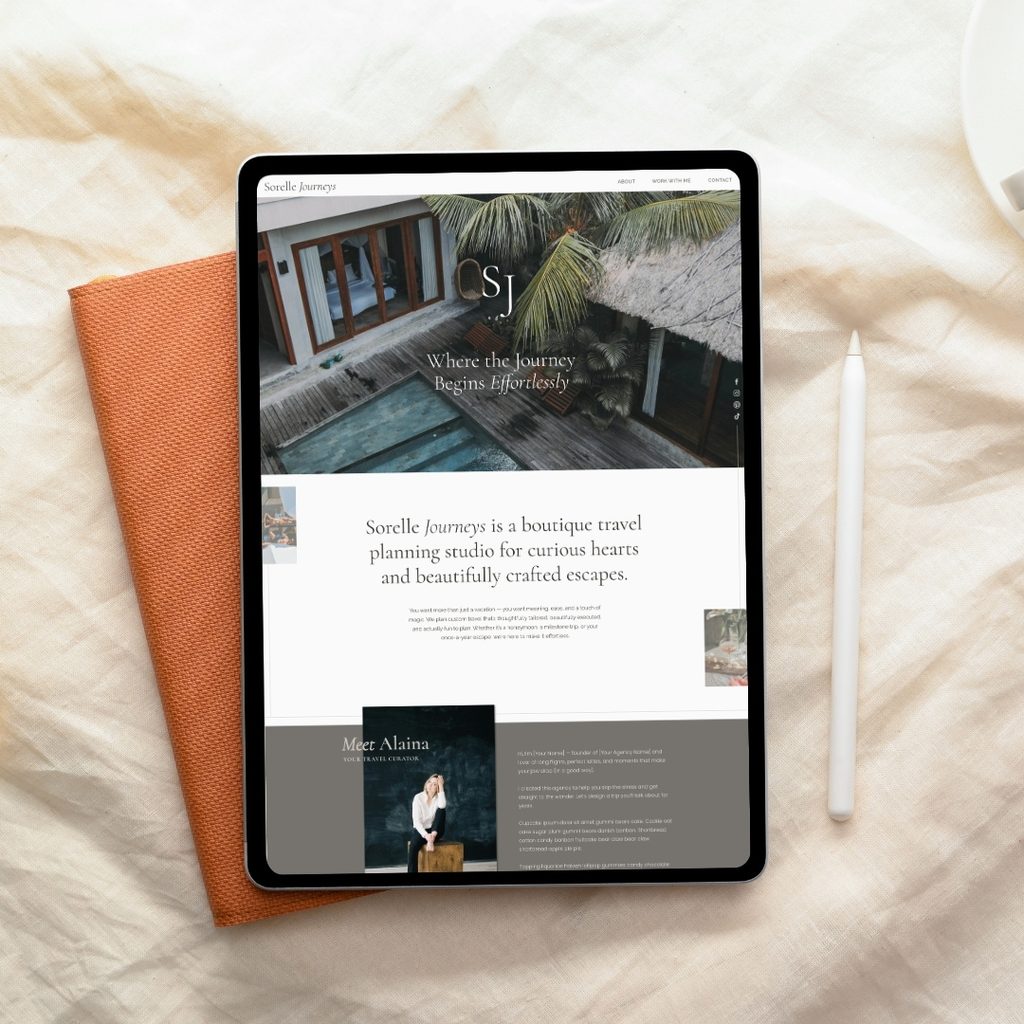
Not every travel advisor needs a multi-page website on day one. A one-page website holds the same essentials as sections on a single page: an introduction, your services, your planning process, a short bio, testimonials and a contact form. Visitors scroll instead of clicking through pages, and you have a much smaller project to finish before you launch.
A one-page site makes a lot of sense when:
- You’re new and want a professional presence online quickly
- Your host agency gives you a website, but it’s built around supplier offers and deals rather than around you and the way you plan travel
- You want to get online now and add pages once you know what your clients ask about most
Starting with one page is a smart, manageable first step, and you can add pages as your business grows.
Pages that can wait
These are worth having eventually, but they don’t need to hold up your launch.
- Destination or niche pages. Add these once you know which destinations and trip types you sell most.
- A blog. Start when you’re ready to post regularly.
- Group travel pages. Add them when you start booking destination weddings or other groups.
- A team page. Add one when there’s a team to introduce.
Your website does not have to include every idea you have for your business before you’re allowed to launch it. You can always add more.
A simple way to get started
If a one-page site sounds like the right fit, the Vacation Designs Creative Co. Mini Website is a one-page Showit template made for travel advisors who want a professional presence without a big website project. It includes Coming Soon and Link in Bio pages, a Showit setup guide and video tutorials, and you can reach a real person by email whenever you get stuck. A Showit subscription is required.
Start with what you need now. You can build from there.
Explore the Mini Website template
Not on day one. Plenty of advisors start with social media and referrals. A website gives potential clients a place to check you out before they reach out, and it’s a home base you own instead of a profile on someone else’s platform.
Most new travel advisor websites are built on five core pages: Home, About, Services, Contact and FAQ. If that feels like too much to start, a one-page website can hold the same essentials in sections.
For many new advisors, yes. A one-page site can introduce you, explain your services and planning process, and give people an easy way to contact you. You can add pages later as your business grows.
It depends on what it shows. If your host site is built around supplier offers and deals, it may not tell potential clients much about you or the way you plan travel. A website centered on you and your services does that job.
Destination or niche pages, a blog, group travel pages and a team page can all wait. Add each one when your business is ready for it, not before you launch.


Comments +